A guided six-module experiential online course for adults
Resolving fear through lived experience, without fighting fear as an enemy.
You may understand what fears you have intellectually and even have tried various techniques, but so often fear and its automatic reactions still persist before conscious choice.
The Fear Clinic is built for that gap between what you know intellectually and what happens more deeply and spontaneously.

Rather than asking you to suppress fear, force an ideal behavior, or just think positively, the course goes deeper to show you the roots of fear, and how real change happens at those deeper layers of being.
The framework is experiential, positive, logical, and informed by science. Its methods are guided by evolutionary anthropology and clinical psychology, with clear outcomes in both individual and group contexts.
The work is structured strategically because the same general principles of change happen for all people, but the work is also flexible. Each person’s journey is individual and unique, and the course empowers that fact.
Course clarification. The Fear Clinic is an educational and experiential online course, not psychotherapy or a clinical service.
MBT continuity. The course content and its facilitator Nathan Rehm grew in relationship with Tom Campbell and his work, My Big TOE. No prior MBT knowledge or spiritual belief is necessary to begin.
Enrollment is not currently open. Join for the confirmed start date, enrollment announcement, and occasional course updates while the next offering is finalized.
The gap the course is built around
Understanding something is not always the same as having another response available.
You can know intellectually that a situation is probably okay, but still notice yourself monitoring, bracing, reacting, going quiet, over-functioning, explaining, appeasing, withdrawing, or preparing for what might go wrong.
Something supportive can happen and still pass by almost immediately. You may discount it, mistrust it, or have no clear way to let it register.
That does not mean insight has failed. It means intellectual understanding and lived learning are not always the same thing.
The Fear Clinic is built around that difference.
Protection
Protection is not the part of you the course is trying to defeat.
Protective responses usually developed for reasons. Monitoring may have helped you anticipate what was coming. Withdrawal may have reduced exposure. Appeasing, performing, helping, preparing, or becoming very self-sufficient may have helped relationships stay workable or made difficult situations more manageable.
A strategy can make sense in the context where it developed and still become limiting when it keeps organizing the present.
The Fear Clinic starts there, with respect for adaptation and no demand that you stop protecting yourself on command.
An old response does not need to be proven irrational before anything can change. The course makes room for more present experience alongside what has already been learned.
From fear toward nourishment
Why does a course about fear spend so much time on nourishment?
Because knowing what you do not want is different from having something else become believable in lived experience.
If protection has learned to expect rejection, pressure, disappointment, danger, isolation, or the need to manage everything yourself, a conscious decision to “stop being afraid” may not change what your attention and body prepare for in the moment.
Fighting that protection is not the only possible route.
What happens when different experience becomes noticeable enough, receivable enough, and relevant enough to count?
That different experience can be ordinary. A color that draws you in. Warmth from a mug in your hands. Music that brings a little more aliveness. The support of a chair. A moment of strength, ease, interest, or acceptable neutrality.
Later, it can become relational: being welcomed without performing, receiving guidance without losing agency, being understood without having to over-explain, being reassured without being controlled, or discovering that someone responds more generously than you expected.
A good experience does not automatically erase old learning. The course does not assume that enough positive moments will rewrite the past.
But when an experience is actually contacted and matters to you, it may add information that was not previously carrying much weight.
Maybe this is possible too.
Fear resolution remains the larger direction. Nourishment is part of the route because deeper change may require more than recognizing fear; it may require becoming able to notice and receive what fear has not taught you to expect.


How the course works
The course builds from what can be received.
The Fear Clinic is intentionally gradual. This is the method overview: the logic of how the work moves. The six-module curriculum below shows how that logic is taught over time.
01
Choice and contact
Begin with a humane frame for fear, protection, adaptation, and learning. Practices are invitations, not tests. The starting point is present experience and workable choice, not the most charged material.
Agency before performance.
02
Sensory and bodily receiving
Notice what is already available through ordinary sensory life, then bring that same receptive attention toward bodily support, ease, warmth, pleasure, strength, vitality, settling, or acceptable neutrality.
You are not being asked to calm down on command or manufacture a better state. The practice is to contact what is actually present.
Start with relatively low-stakes experience.
03
Relational nourishment: receiving before generating
Explore qualities that can feel nourishing between people: protection and support, shared enjoyment, useful guidance, being understood, reassurance, and encouragement.
A recurring principle is receiving before generating. Instead of immediately asking you to become your own perfect source of safety, reassurance, encouragement, or love, the course makes room to recognize and receive these qualities where they are already available.
More relational relevance, still with choice.
04
Personal relevance and positive surprise
A good moment can happen without changing what you expect next.
Later work focuses on moments when reality turns out somewhat better than expected, especially when the difference matters personally. The practice is to stay with what actually happened long enough to ask what, if anything, now feels a little more possible.
Let the better-than-expected moment count.
05
Integration
The final movement is not permanent positivity. It is greater access, discernment, flexibility, and choice in how you relate to yourself and participate with others.
A faint response counts. Neutrality counts. Skepticism, grief, activation, numbness, or no noticeable response can all be useful information. The course does not require a particular emotional result.
Flexibility rather than a permanent state.

Optional micro-experience
Notice what is already here.
If you want, take a moment to notice one ordinary sensory detail that is already available: a color, texture, sound, contact point, temperature, or something else that draws even a little attention.
You do not need to relax, feel better, or find anything important.
The response may be pleasant, neutral, faint, skeptical, complicated, or absent. You can also skip this entirely.
The invitation is simple: notice what is actually here before asking it to change.
Curriculum
Six modules that build on one another.
The sequence moves from context and relatively low-stakes experience toward greater personal relevance, relational meaning, and integration.
01
A Humane Beginning
Protection, context, and choice
Begin by understanding fear and protection as learned adaptations, not evidence that something is wrong with you. You are introduced to the course’s approach to choice, pacing, nourishment, and experiential learning.
02
Sensory Nourishment
Learning to notice what is here
Explore the ordinary sensory world as a source of potentially nourishing experience: sound, texture, color, nature, movement, atmosphere, craft, taste, and other forms of five-sense engagement.
03
Bodily Nourishment
Receiving support, ease, pleasure, strength, and vitality
Bring the same receptive attention into bodily experience. Explore moments of support, warmth, comfort, ease, pleasant sensation, strength, vitality, or acceptable neutrality without making calm the goal.
04
Relational Nourishment
Recognizing what feels good between people
Explore relational experiences that add something supportive to life: being safeguarded, enjoyed, guided, understood, reassured, and encouraged.
The course uses SECURE as a simple organizing map for these six qualities:
- Safeguarded: being physically protected without being over-protected.
- Enjoyment: being welcomed or delighted in without having to perform for it.
- Counsel: guidance or orientation that still leaves your agency intact.
- Understood: being received accurately without needing perfect explanation or defense.
- Reassurance: steadiness or support when something is uncertain.
- Encouraged: support toward growth, courage, agency, or meaningful action while choice remains yours.
You do not need all six equally, and SECURE is not an assessment.
05
When Good Surprises Us
Letting better-than-expected experience matter
This module asks a more specific question: what happens when a relational moment turns out better than you expected?
The focus is not on collecting good experiences. It is on recognizing when a better outcome matters personally, contacting what actually happened, and letting the smallest believable update carry some weight.
The desired update is modest. Not “everything is safe now,” but perhaps: Maybe this is possible too.
06
Integration
From receiving toward self-relationship and participation
The final module brings the course together. Nourishing qualities may come from outside you, and they may also become more available in how you relate to your own experience and participate with other people.
The aim is greater access, flexibility, and choice, while difficult or protective states remain part of being human.
Participation
What participation actually looks like
The Fear Clinic does not require constant live attendance, public disclosure, or a particular emotional response in order to participate fully.
Recorded course teaching
Six modules of webinar/course content that explain the progression and guide the experiential work.
Guided audios
Experiential practices you can use alongside the course material at your own pace.
A weekly live call
A recurring live space for course-related teaching, questions, connection, and integration.
Recordings of live calls
Live attendance is optional. Calls are recorded so missing a session does not mean losing the course.
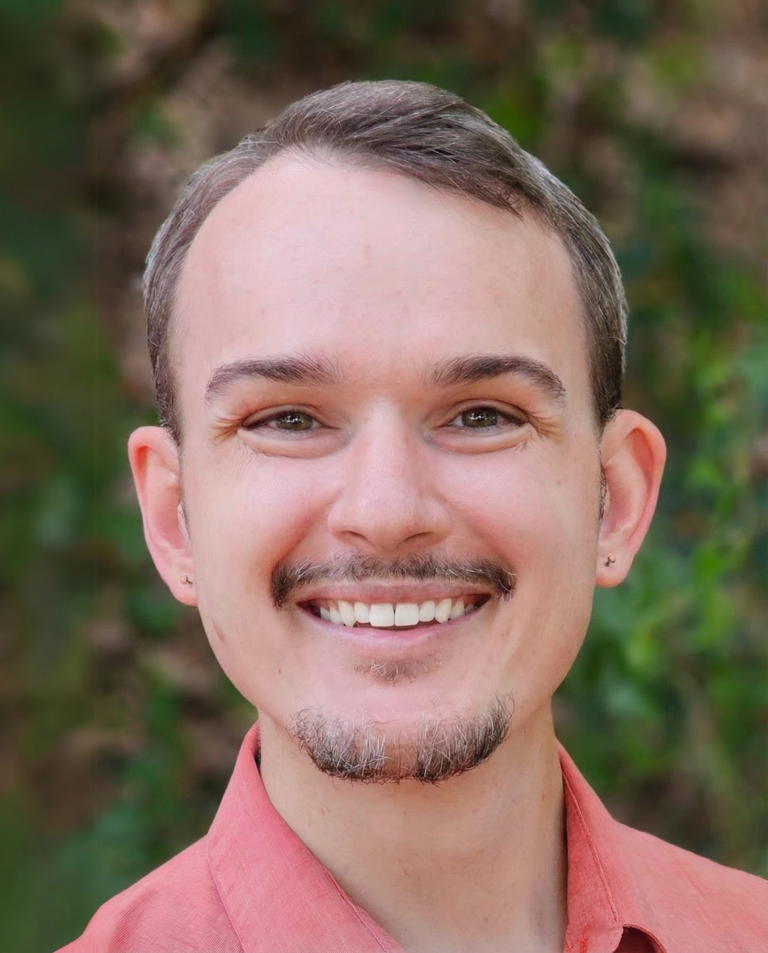
Facilitator
About Nathan Rehm
I’m Nathan Rehm, the creator and facilitator of The Fear Clinic.
I built this course around a question that has stayed important to me across both professional work and my own exploration: what helps something we understand intellectually become more available in lived experience?
My professional background is in psychotherapy, including somatic and experiential approaches. That background informs the way I think about protection, pacing, agency, and the difference between explaining an experience and actually having it.
My psychotherapy background informs how I designed the course, but The Fear Clinic is separate from my therapy practice. Participation does not create a therapist-client relationship.
My role is to offer a coherent course, guide the practices, host the live learning space, and keep the work grounded in choice and realistic claims.
Origins and continuity
Rooted in the MBT conversation about fear, open to people beyond it.
The Fear Clinic emerged in a community where fear is taken seriously as part of consciousness development. Tom Campbell’s My Big TOE work has long distinguished between understanding an idea intellectually and changing at the deeper level from which we actually perceive, choose, and respond.
That distinction is one reason this course is experiential.
For someone coming from MBT, the larger aspiration may sound familiar: less fear, less fear-driven choice, and greater capacity for love, care, connection, and freer participation in life.
The Fear Clinic does not try to prove MBT metaphysics through psychology or neuroscience. It works with a simpler practical question: what can you actually notice, receive, and learn from in your present experience?
MBT knowledge is not required. Spiritual belief is not required. If that context matters to you, it has a legitimate place here. If it does not, the course can stand on its experiential method alone.
Fit, agency, and boundaries
A course you can choose your way through
This may suit you if…
You are an adult who wants to work with fear experientially, values choice over pressure, and is willing to explore sensory, bodily, and relational experience gradually without treating yourself as a problem to fix.
You do not need to identify as traumatized, have an MBT background, be good at meditation, or be comfortable with public disclosure.
Your response does not have to look a certain way
During experiential work, a response might be warm, subtle, neutral, skeptical, numb, grieving, activated, mixed, or absent. None of those automatically means you are doing the course wrong.
Practices can be adjusted or skipped. Live attendance is optional. Personal disclosure is not required.
Practical course details
Course details
For returning visitors or anyone who already understands the approach, the material facts should be easy to find in one place.
Timing for the next course is still being finalized.
To be confirmed before enrollment opens.
To be confirmed before enrollment opens.
To be confirmed before enrollment opens.
Six modules of recorded course/webinar teaching, guided audios, and experiential practices.
One live call each week. Day, time, and timezone will be confirmed before enrollment opens.
Optional.
Weekly live calls are recorded. Core course teaching remains available in recorded form.
Access details will be confirmed before enrollment opens.
To be confirmed before enrollment opens.
To be confirmed before enrollment opens.
Any payment-plan terms will be confirmed before enrollment opens.
A 14-day money-back guarantee is planned. Final terms will be confirmed before enrollment opens.
FAQ
Questions people may still have
Is The Fear Clinic therapy?
No. The Fear Clinic is an educational and experiential online course. Nathan is a therapist by professional background, but he is not providing individualized psychotherapy, diagnosis, medical care, or clinical monitoring through the course. Participation does not create a therapist-client relationship.
Do I need to know My Big TOE or Tom Campbell’s work?
No. The course has a genuine relationship to the MBT community and many participants may arrive through that context, but the course is written and taught so that the experiential work can stand on its own.
Is spirituality required?
No. Spiritual, archetypic, or more-than-human sources matter in some form to most people, but specific beliefs are not a requirement. The course is concerned with whether a source or experience is relevant and receivable for you.
Do I need to consider myself traumatized?
No. The course does not require a trauma identity or a diagnosis. It is for adults interested in the gap between what they understand intellectually and what becomes available in lived response.
What if I struggle to feel positive experience?
That does not disqualify you, and it does not mean you are “blocked.” The course deliberately allows for faint, neutral, skeptical, numb, grieving, activated, mixed, or absent responses. Practices can be adjusted, approached from greater distance, or skipped.
What if an exercise does nothing for me?
Then “nothing noticeable happened” is valid information. The course is not a performance test. You can try a different source, lower the intensity, use a different sensory channel, return another time, or leave the exercise alone.
What if something good brings up grief, discomfort, skepticism, or activation?
That can happen. Something supportive may arrive alongside grief, discomfort, skepticism, numbness, or activation. You are not required to push through or turn a complicated reaction into a positive one. Choice and self-attunement remain part of the practice.
Do I have to share personal material with the group?
No. Personal disclosure is not required. You can participate without telling the group private details about your history or relationships.
Are the live calls required?
No. Live attendance is optional.
Are the live calls recorded?
Yes. Weekly live calls are recorded so participants can use the course without attending every session live.
Is group participation required?
No. The course can include a shared learning environment, but active posting or public participation is not a requirement unless a future offer explicitly changes that expectation.
How much time should I expect to spend each week?
Expected weekly time will be confirmed before enrollment opens.
What support is included?
Pre-recorded course teaching, guided audio exercises, and a weekly live call. One-to-one individual coaching support is available, but separate from this offering.
What if I need more therapeutic or individual support?
The Fear Clinic is not a substitute for professional mental health services. If your needs require personal assessment, treatment, crisis support, medical guidance, or ongoing one-to-one attention, an appropriate professional or local support resource may be a better fit.
When does the next course begin?
The next start date is still being finalized. Join the interest list to receive the confirmed timing and enrollment announcement when they are ready.
How long do I have access?
Access details will be confirmed before enrollment opens.
How does the 14-day money-back guarantee work?
A 14-day money-back guarantee is planned. Final terms will be confirmed before enrollment opens.
What happens after I enroll?
After enrollment, you will receive purchase confirmation, course-access instructions, and orientation/start information. Exact delivery timing will be stated in the confirmed course details before enrollment opens.
Next course
Interested in the next Fear Clinic course?
If the approach fits what you are looking for, join the interest list and I will send you the confirmed timing, enrollment announcement, and occasional course updates as the next offering becomes firm.
Your information is submitted directly to Sender for interest-list management. Read the Fear Clinic privacy policy and Sender privacy policy.
Course and enrollment updates only. You can unsubscribe at any time.